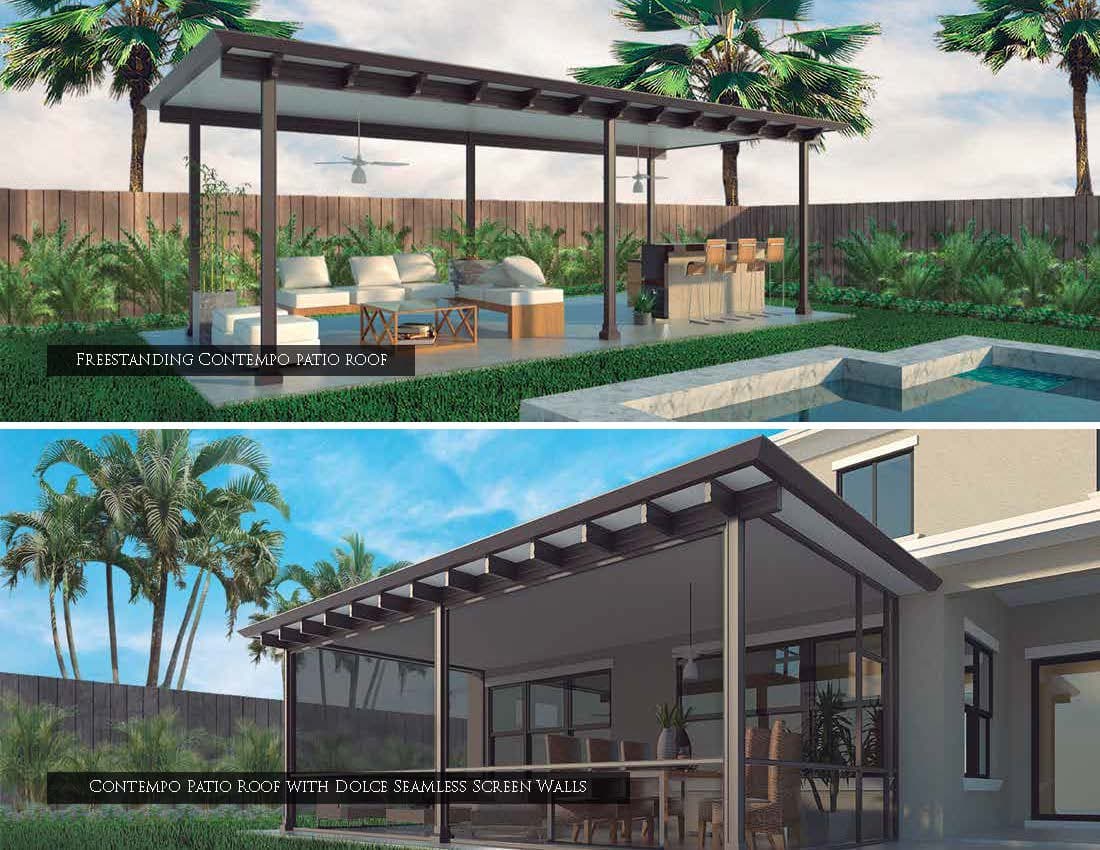
Screen rooms in Jacksonville fall into three pricing tiers in 2026, and which one applies depends mostly on the roof type and the upgrades you choose for hardware, mesh, and accessories.
The three tiers
Basic screen enclosure — $8,000 to $15,000. Aluminum frame with standard fiberglass mesh, attached to the house with mesh roof or no roof. Most common for pool enclosures and basic backyard mosquito control. Renaissance Patio system standard.
Premium screen room with solid roof — $16,000 to $30,000. Aluminum frame with stronger spec, premium mesh (no-see-um or pet-resistant), and aluminum-pan or polycarbonate roof. Reads as an outdoor room rather than a screened porch. Typical primary-residence Jacksonville install.
Glass-enclosed sunroom (un-conditioned) — $25,000 to $50,000. Glass walls instead of screen, polycarbonate or solid roof, no HVAC connection. Adds usable interior space without becoming part of the conditioned house.
For four-season conditioned sunrooms (HVAC-tied or with mini-split), see the sunroom guide. Those run $40,000 to $95,000.
What's in each tier
Basic ($8K–$15K) typically includes:
- Aluminum frame engineered to FBC 130 mph (Duval inland) or 140 mph (coastal Jacksonville)
- Standard 18×14 fiberglass mesh
- Standard zinc-plated hardware
- One screen door (lockable)
- Up to 200 sqft enclosed area
Premium ($16K–$30K) typically includes:
- Heavier-spec aluminum frame
- No-see-um mesh or 20×20 pet-resistant mesh
- Stainless hardware (recommended for east-of-Intracoastal)
- Aluminum-pan or polycarbonate solid roof
- Two screen doors
- Up to 350 sqft enclosed area
- Optional ceiling fans, lighting, electrical outlets
Glass-enclosed ($25K–$50K) typically includes:
- All premium spec features
- Glass panels in operable windows or fixed glazing
- More substantial framing to support glass weight
- Insulated polycarbonate or solid roof
- Multiple operable doors
- Standard electrical (lighting, outlets, fans)
The four upgrades that move you between tiers
Most Jacksonville screen room projects start in the basic tier and get pushed up by one or more of these:
1. No-see-um mesh. Standard fiberglass passes through Florida's biting midges and small gnats. No-see-um mesh blocks them. The cost difference is small ($300 to $800 on a typical room), and the comfort difference is significant. Worth doing in nearly every NE Florida install.
2. Solid roof instead of mesh roof. A solid roof (aluminum-pan, polycarbonate, or true shingled) makes the screen room usable in the rain. Adds $4,000 to $9,000 over a mesh roof. Pushes a $12,000 basic enclosure into the premium tier.
3. Stainless hardware. Standard plated hardware corrodes within 7 to 10 years on the east side of A1A or in coastal Jacksonville Beach. Stainless hardware adds $400 to $1,000 and lasts decades. Mandatory for coastal installs; optional but recommended for inland.
4. Glass instead of screen. Converting from screen to glass walls turns the screen room into a sunroom. Adds $8,000 to $20,000 depending on glass spec. Changes the use case (less air circulation but rain- and wind-protected).
What's not in the cost ranges
Three items often added to screen room projects:
- Ceiling fans. $400 to $1,200 per fan installed. Almost always worth it.
- Lighting. $400 to $1,500 for full lighting setup.
- Electrical outlets. $200 to $600 per outlet.
- Pet door. $300 to $700.
A complete Jacksonville screen room with no-see-um mesh, polycarbonate roof, ceiling fan, and lighting typically lands around $20,000 to $25,000.
Permit and timeline
Permits are required in Duval County for any screen enclosure attached to the house. The City of Jacksonville Building Inspection Division at the Edward Ball Building processes residential screen room permits in 3 to 6 weeks.
Renaissance Patio's documented engineering shortens permit time because the structural calculations are on file. Off-the-shelf or custom systems require engineering review for each install.
Total project timeline: 4 to 10 weeks from contract to final inspection. Construction itself runs 1 to 2 weeks for a basic enclosure, 2 to 4 weeks for premium, 4 to 8 weeks for glass-enclosed.
Insurance considerations
Verify that your homeowner's insurance policy covers the screen room at replacement cost. Some policies depreciate detached or semi-detached structures faster than the main house, which can leave you short on a hurricane claim.
A permitted Renaissance enclosure is insurable at full replacement cost in most policies. An unpermitted DIY enclosure typically isn't covered at all.
Common Jacksonville scenarios
Three patterns Mark sees most often in Duval County screen room projects:
1. Existing pool with no enclosure. Adding a basic mesh enclosure for mosquito control and pool deck shade. $10,000 to $15,000 for a typical 14×28 pool deck enclosure.
2. Existing screened porch with mesh roof, upgrading to solid roof. Converting from a wet-when-it-rains porch to a year-round outdoor room. $7,000 to $14,000 for the roof upgrade plus possible mesh re-screening.
3. New build patio + screen room combination. Building a new patio cover and screen enclosure together. $18,000 to $35,000 for a complete 16×20 setup with polycarbonate roof, no-see-um mesh, and electrical.
Related reading
- Renaissance Patio vs DIY Patio Cover Comparison — when each makes sense
- Patio Cover Types in Northeast Florida — material comparison
- Sunroom Cost & Permits in Clay County, FL — full guide
- Renaissance Patios & Sunrooms — Tivey Construction — what's included in a Tivey install
Ready when you are.
Tell me about your project — you'll see your real budget range mid-flow, and I'll call within 24 hours. No spam, no call center, just me.