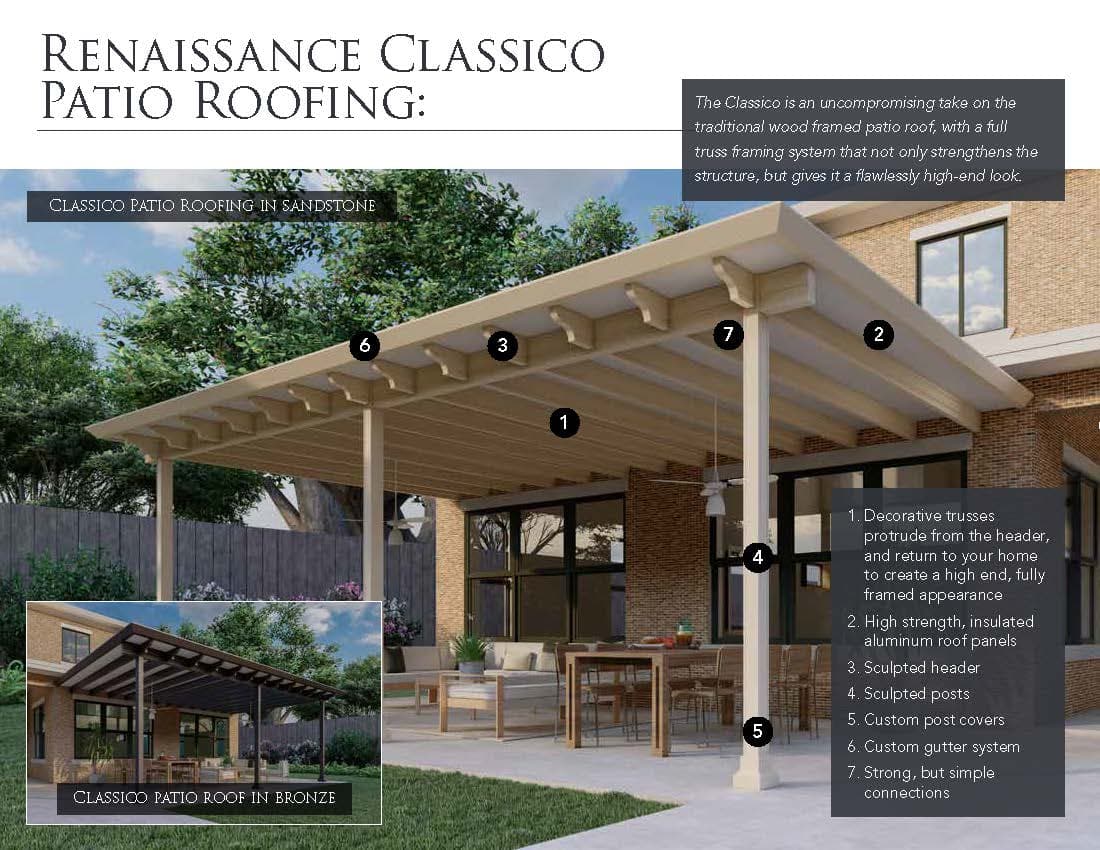
The patio cover decision in NE Florida usually comes down to material — aluminum-pan, standard polycarbonate, premium UV-stabilized polycarbonate, or true solid roof. The right choice depends on your tree canopy, your tolerance for rain noise, and how the patio gets used.
The four cover types
Aluminum-pan roof. Insulated aluminum panels with a finished underside. Sheds rain quietly and blocks 100% of sun. Most common for full-shade installs.
Standard polycarbonate. Translucent corrugated or twin-wall polycarbonate. Lets 30 to 60% of light through, blocks UV. Cheapest of the polycarbonate options. UV stabilization wears in 8 to 12 years; panels yellow over time.
Premium UV-stabilized polycarbonate (Hi-Lite or equivalent). Higher-grade polycarbonate with extended UV resistance. Lasts 20+ years with minimal yellowing. Cost is 30 to 50% above standard polycarbonate.
Solid roof (shingled or metal). True roof structure with shingles or standing-seam metal matching the existing house roof. Highest cost; longest lifespan. Functions visually as an addition to the house rather than a separate cover.
Light transmission and heat behavior
Three behaviors that change how the patio actually feels:
Aluminum-pan. No light through, deep shade underneath. Heat blocked completely. Best for west- or south-facing patios where the goal is escape from summer sun. Reads "shaded room" rather than "outdoor space."
Standard polycarbonate. Light passes through but UV is blocked. The space underneath stays bright but doesn't tan exposed skin. Heat gain depends on color (clear vs. bronze vs. opal); typically warmer than aluminum-pan but cooler than no cover.
Premium UV-stabilized polycarbonate. Same light behavior as standard but lasts much longer. Same heat behavior.
Solid roof. Same shade behavior as aluminum-pan but with a finished house-matching aesthetic. No light through.
Rain noise
Often the deciding factor in NE Florida where summer thunderstorms are loud and frequent:
Aluminum-pan. Quietest. Insulated construction muffles rain to a low-volume background sound. Conversation is normal during a heavy storm.
Standard polycarbonate. Loudest. Single-layer panels resonate with raindrops. Conversation gets difficult in a moderate to heavy storm. Many homeowners find this charming initially and frustrating after a year.
Premium polycarbonate (twin-wall). Quieter than standard single-wall polycarbonate due to the air gap between layers. Still louder than aluminum-pan or solid roof.
Solid roof. Quiet. Same rain-on-roof acoustics as the rest of the house.
Tree canopy interaction
NE Florida's mature live-oak canopy changes the calculus on light transmission:
Yards with heavy tree canopy. Polycarbonate is usually the right call. The dappled light through the canopy reaches the polycarbonate, then continues into the patio. An aluminum-pan roof under heavy tree canopy creates a dark space that feels enclosed rather than outdoor.
Yards with no significant tree canopy. Aluminum-pan or solid roof is usually right. Polycarbonate in full sun runs hotter and ages faster.
Mixed canopy. Premium UV-stabilized polycarbonate is the safe call. Handles partial sun without the lifespan penalty of standard polycarbonate.
Cost comparison for a 16×20 patio cover
Renaissance Patio system installed by Tivey:
- Aluminum-pan roof: $14,000 to $19,000
- Standard polycarbonate: $13,000 to $17,000
- Premium UV polycarbonate (Hi-Lite): $16,000 to $22,000
- Solid shingled roof to match house: $20,000 to $32,000
Solid roof is more expensive because it requires structural framing matching house roof construction, shingle work, soffit, fascia, and tie-in flashing.
Permit requirements (all four types)
All four cover types require a permit in Clay, Duval, and St. Johns counties because all four attach to the house. Permit cost and timeline are similar across types.
What changes by type:
- Solid roof requires more extensive structural review (bearing on house roof, tie-in flashing detail).
- Polycarbonate roofs require slightly less wind-load engineering than solid roofs (lower dead load, less wind catch).
- Aluminum-pan roofs are middle of the range.
Renaissance Patio's documented engineering shortens permit timelines for the first three options. Solid-roof additions are essentially small additions and have addition-style review timelines.
Climate-specific recommendations for NE Florida
Three configurations Mark recommends most often for NE Florida primary residences:
Heavy-use entertainment patio with mature tree canopy. Premium UV polycarbonate. Bright space underneath, quiet enough during rain, lasts 20+ years.
West-facing patio in full sun. Aluminum-pan roof with ceiling fans. Blocks the brutal late-afternoon sun, stays cool, quiet during rain.
Long-term primary residence with high aesthetic priority. Solid shingled roof to match existing house. Reads as part of the house architecture rather than an attached structure. Most expensive but most resale-positive.
What's not in the cost ranges
Three items often added to patio cover projects:
- Ceiling fans. $400 to $1,200 per fan installed. Almost always worth it for outdoor patios in NE Florida.
- Outdoor lighting. $400 to $1,500 for under-cover lighting (recessed or track).
- Screen enclosure walls. Adds $4,000 to $12,000 to convert a covered patio into a screened lanai (mosquito control changes the use case substantially).
Related reading
- Renaissance Patio vs DIY Patio Cover Comparison — engineering and warranty trade-offs
- Hurricane-Rated Patio Cover Spec in Florida — wind-load engineering detail
- Sunroom Cost & Permits in Clay County, FL — full guide
- Renaissance Patios & Sunrooms — Tivey Construction — what's included in a Tivey install
Ready when you are.
Tell me about your project — you'll see your real budget range mid-flow, and I'll call within 24 hours. No spam, no call center, just me.