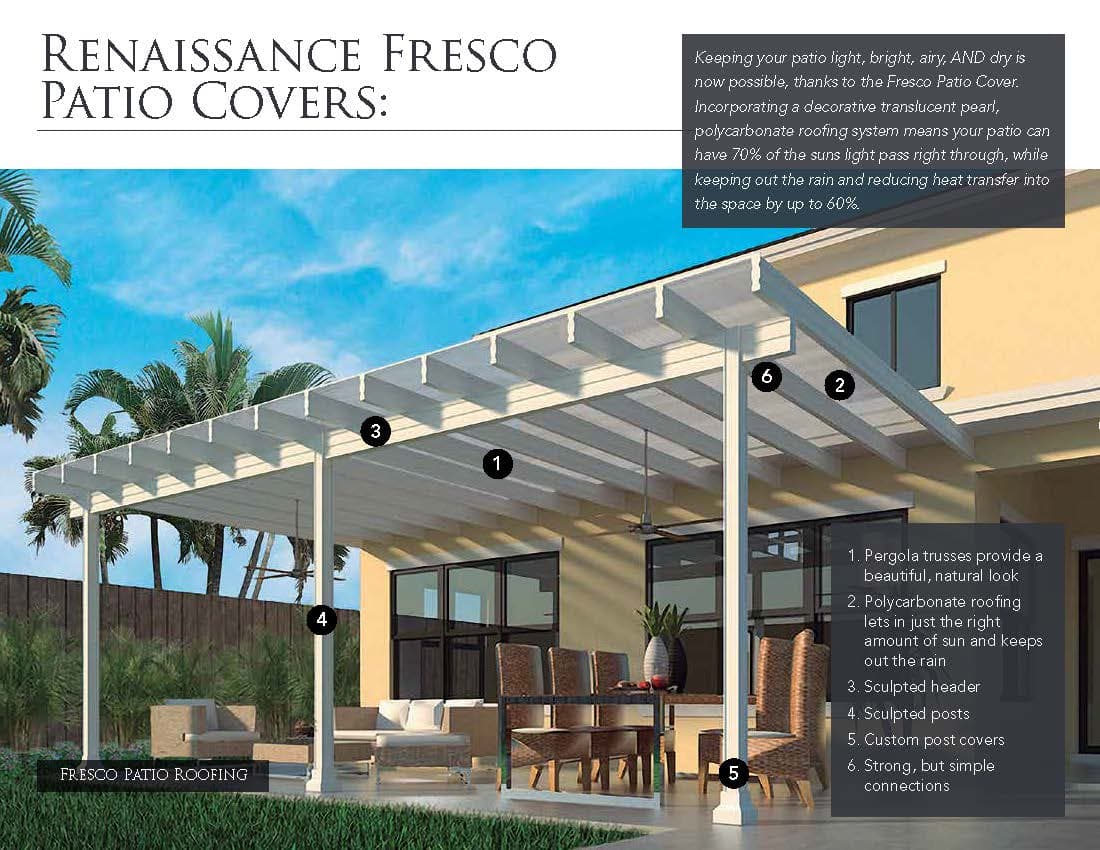
A NE Florida sunroom can be one of two things: a year-round outdoor room that becomes the most-used space in the house, or a summer-only space that sits empty from November through March (and a winter-only space that's unusable July through September). The difference comes down to four design decisions that get made (or skipped) at design stage.
What "year-round usable" actually means in NE Florida
Year-round in NE Florida means usable through:
- Summer. July high temperatures average 92°F with 70%+ humidity. Direct sun on a glazed sunroom can push interior temperatures to 105–110°F without intervention.
- Hurricane season. June through November. Strong wind, heavy rain, sometimes named-storm conditions.
- Winter. January low temperatures average 45°F with occasional frost. Cold snaps can drop into the 30s.
- Pollen season. February through April. NE Florida pollen counts among the worst in the country.
A sunroom that handles all four conditions needs more than glass walls and a roof.
Decision 1 — Conditioned or un-conditioned?
The biggest decision. It defines almost every other choice.
Un-conditioned sunroom. No HVAC tie-in. Air temperature inside follows outdoor conditions roughly. Usable in spring and fall (March-May, October-November), uncomfortable in summer afternoons, cold but tolerable in winter mornings with a portable heater.
Conditioned sunroom (HVAC-tied or mini-split). Air temperature controlled. Becomes part of the house's climate envelope. Usable year-round.
The cost difference is significant — un-conditioned sunrooms run $20,000 to $50,000; four-season conditioned sunrooms run $40,000 to $95,000. The use-pattern difference is also significant — un-conditioned sunrooms get used 4 to 6 months of the year, conditioned sunrooms get used 11 to 12.
If the goal is "year-round usable," conditioned is the right call.
Decision 2 — HVAC integration approach
If conditioning the sunroom, two paths:
Tie into existing HVAC. Add a duct run from the existing house HVAC to the sunroom. Cheapest option ($1,500 to $4,000), but only works if the existing HVAC has spare capacity. A Manual J recalculation tells you whether it does.
Dedicated mini-split. Single-zone or multi-zone mini-split with its own outdoor unit. More expensive ($3,500 to $8,000 installed), but doesn't depend on existing system capacity. Better temperature control, independent on/off operation.
Mark's recommendation: mini-split for any sunroom over 200 sqft, or any sunroom that gets used at different times than the main house. The independent control matters more than the upfront cost difference suggests.
Decision 3 — Glazing spec
The glass on a NE Florida sunroom does more than let in light. It needs to:
- Block UV (otherwise fabrics, furniture, and floors fade rapidly)
- Reduce solar heat gain (otherwise summer afternoons are unusable)
- Provide thermal insulation (otherwise winter mornings are cold and HVAC bills spike)
- Withstand FBC wind-load and impact (storms and projectiles)
Standard single-pane glass meets none of these well. Premium options:
Low-E coated double-pane. Reduces solar heat gain by 30 to 50% compared to clear single-pane. Improves thermal insulation. Standard for any conditioned sunroom in NE Florida.
Impact-rated laminated glass. Required by code in many NE Florida coastal zones. Withstands hurricane projectile impact. Significant cost premium ($30 to $60 per square foot of glazing) but mandatory for east-of-A1A and coastal Jacksonville installs.
Tinted or reflective coatings. Further reduce solar heat gain in west- or south-facing sunrooms. Worth considering for any sunroom with substantial direct afternoon sun.
The glazing spec usually drives 20 to 40% of the total sunroom budget on a four-season conditioned install.
Decision 4 — Orientation and shading
NE Florida orientation matters more than the brochure suggests.
North-facing sunroom. Easiest to keep usable year-round. Limited direct sun, no overheating problem. Insulation and HVAC are the primary climate-control tools.
East-facing sunroom. Beautiful in the morning. Manageable in summer with proper glazing and HVAC. The most popular orientation.
West-facing sunroom. Punishing in summer afternoons. Requires premium tinted glazing, ceiling fans, and substantial HVAC capacity. Adds 20 to 40% to the climate-control budget.
South-facing sunroom. Heavy direct sun year-round. Hardest to keep usable in summer. Premium glazing and substantial HVAC required.
For west- and south-facing sunrooms, exterior shading (Aria-style trellises, mature trees, awnings) is a high-leverage cost reduction. Blocking sun before it hits the glass is far cheaper than removing the heat after it's inside.
What sunroom failure looks like
Two common failure modes for NE Florida sunrooms that don't address all four decisions:
1. The summer abandonment. Un-conditioned sunroom or under-glazed conditioned sunroom that gets too hot to use July through September. Homeowner uses it April-May and October-November; sits empty the rest of the year. Cost-per-use ends up high.
2. The pollen room. Sunroom with operable windows or screens used in pollen season (February-April) and finds NE Florida pollen accumulates everywhere. Maintenance becomes constant; usability drops.
The avoidance for both: condition properly, glaze properly, orient with intention, and add exterior shading where direct sun is strong.
What permitted four-season construction actually requires
A four-season conditioned sunroom is essentially a small addition. It requires:
- Footings (typically) below frost depth
- Insulated walls and roof to current FBC R-values
- Code-compliant glazing
- HVAC sized via Manual J calculation
- Electrical to current code
- Vapor barrier and moisture management
This is why four-season sunrooms cost 2 to 3 times what un-conditioned ones do — they're built to addition standards, not to outdoor-cover standards.
Related reading
- Sunroom Cost & Permits in Clay County, FL — full guide with cost tiers
- Sunroom Permit Process in Clay County and Jacksonville, FL — permit walkthrough
- Patio Cover Types in Northeast Florida — material comparison for un-conditioned covers
- Renaissance Patios & Sunrooms — Tivey Construction — what's included in a Tivey install
Ready when you are.
Tell me about your project — you'll see your real budget range mid-flow, and I'll call within 24 hours. No spam, no call center, just me.