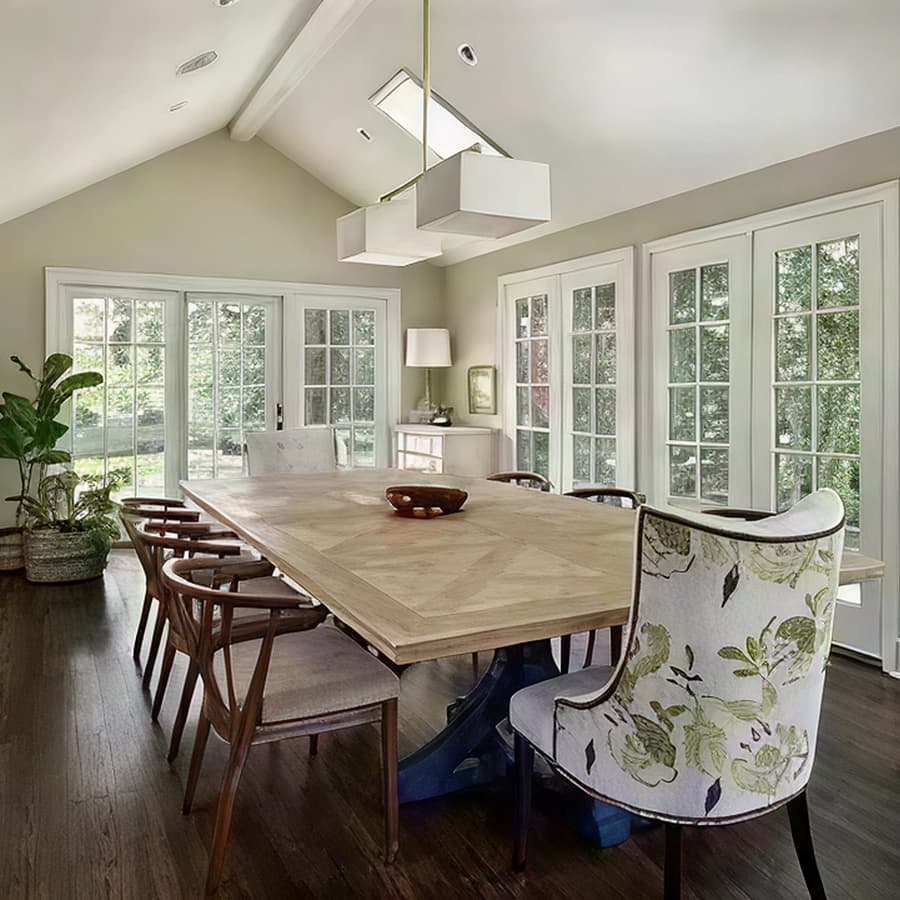
Florida House Bill 1239, effective 2026, changed the ADU landscape in single-family residential zones across the state. The headline summary in news coverage was "Florida legalizes ADUs" — which is partially right and meaningfully wrong.
Here's what the law actually changed and what it left untouched.
What HB 1239 changed
1. Single-family zoning preemption. Local zoning ordinances that prohibit accessory dwelling units in single-family residential districts are preempted by state law. NE Florida cities and counties cannot ban ADUs outright in these zones.
2. Owner-occupancy requirements. Some local rules requiring the property owner to live in either the main house or the ADU are limited under HB 1239. The specific scope of preemption varies; verify with the local jurisdiction.
3. Minimum lot size restrictions. Local minimum lot size requirements specifically for ADUs (separate from the underlying zoning's lot size minimum) are preempted.
4. Off-street parking minimums in transit-served areas. Some local off-street parking requirements for ADUs are reduced or eliminated in areas with adequate transit access.
5. Accessory dwelling defined statewide. HB 1239 establishes a state-level definition of "accessory dwelling unit," which provides consistency across NE Florida counties.
What HB 1239 didn't change
1. Building permit process. ADUs still require building, mechanical, electrical, and plumbing permits through the local building department. HB 1239 doesn't make ADUs permit-exempt.
2. Conditional Use Permit (CUP) process where it applies. Some NE Florida counties (Clay, for example) require a CUP for ADUs through Planning and Zoning, separate from the building permit. HB 1239 doesn't automatically eliminate these.
3. Florida Building Code compliance. ADUs must meet FBC requirements for habitable space — energy code, hurricane wind-load, plumbing and electrical code, accessibility considerations.
4. Impact fees. Local impact fees on conditioned square footage still apply. A 600 sqft ADU typically incurs $4,000 to $10,000 in impact fees.
5. HOA covenants. This is the wildcard. HB 1239 preempts government zoning, not private HOA covenants. If your subdivision's recorded covenants prohibit ADUs, that prohibition stands regardless of state preemption.
The HOA wildcard explained
Most NE Florida master-planned subdivisions have recorded covenants that restrict ADUs:
- Fleming Island Plantation, Eagle Harbor, Pace Island (Clay County): Most restrict ADUs in their covenants.
- Sawgrass, Marsh Landing, TPC Sawgrass, Ponte Vedra Beach (St. Johns): Restrict in most cases.
- Newer Clay County developments: Mixed.
- Older Mandarin, Riverside, San Marco neighborhoods (non-HOA): ADUs generally allowed.
- Rural Clay and St. Johns (no HOA): ADUs generally allowed.
Recorded covenants are private contracts enforceable by the HOA against the homeowner. State zoning preemption doesn't override them. The first verification step on any NE Florida ADU project is reading the recorded covenants for the specific subdivision.
Practical impact in NE Florida by county
Clay County: HB 1239 has limited practical impact because the dominant residential subdivisions (Fleming Island, Eagle Harbor, Pace Island) have HOAs that restrict ADUs. Rural and older non-HOA Clay County areas were already ADU-permissive.
Duval County (Jacksonville): Larger practical impact. Many Jacksonville urban-core neighborhoods (Riverside, Avondale, Springfield, Murray Hill, Mandarin) are non-HOA and were subject to local zoning that has now been preempted. ADU construction in these areas is now meaningfully easier.
St. Johns County: Mixed impact. Older non-HOA areas of St. Augustine and rural St. Johns get the benefit of preemption; HOA-governed Ponte Vedra Beach, Sawgrass, etc. remain restricted by covenant.
What ADU options actually exist now
Three forms of ADU are common in NE Florida 2026:
1. Garage conversion. Existing 2-car garage converted to a one-bed, one-bath unit with kitchenette. Preserves the lot's footprint; cheapest option ($40K-$95K). Generally allowed under most HOA covenants because it doesn't add a "second dwelling structure."
2. Attached in-law suite. New 400-700 sqft addition attached to the main house with separate entrance and kitchenette. Often qualifies as an addition rather than an ADU under HOA covenant definitions, which may make it allowable where a true detached ADU isn't.
3. Detached new-build ADU. Fully separate dwelling, 500-1000+ sqft, own foundation and utilities. Most expensive ($150K-$450K+) but most flexible. Subject to both HB 1239 preemption (relaxes government zoning) and HOA covenants (which can still prohibit).
What to verify before scope
Five things to verify on any NE Florida ADU project:
1. Subdivision covenants. Pull the recorded covenants for your specific subdivision. Most are available through the HOA management company or the County Clerk's office. Verify ADU permissibility.
2. Local zoning current state. Even with HB 1239 preemption, local rules on setbacks, height, lot coverage, and design standards still apply.
3. Conditional Use Permit requirement. Verify whether the local jurisdiction still requires a CUP. Clay County does; verify others.
4. Septic or sewer capacity. If the property is on septic, the existing system may not support the additional fixture count.
5. Utility connection. Verify whether ADU utilities can be sub-metered from the main house or require separate JEA / CCUA service.
Future legislative outlook
HB 1239 is a starting point, not an endpoint. Florida ADU rules are likely to continue evolving in 2026-2028. Three areas to watch:
1. HOA preemption proposals. Some Florida legislators have proposed extending preemption to private HOA covenants. None have passed as of 2026, but this is an active area of legislative debate.
2. Short-term rental restrictions. HB 1239 didn't directly address short-term rental of ADUs. Local rules on STR continue to apply and vary substantially.
3. Statewide design standards. Some proposals would establish statewide ADU design standards (size, parking, setbacks) that supersede local rules.
Related reading
- ADU Cost & Permits in Clay County, FL — full guide with cost tiers
- In-Law Suite vs Detached ADU Florida Rules — format decision framework
- Home Additions — Tivey Construction — service overview
Ready when you are.
Tell me about your project — you'll see your real budget range mid-flow, and I'll call within 24 hours. No spam, no call center, just me.