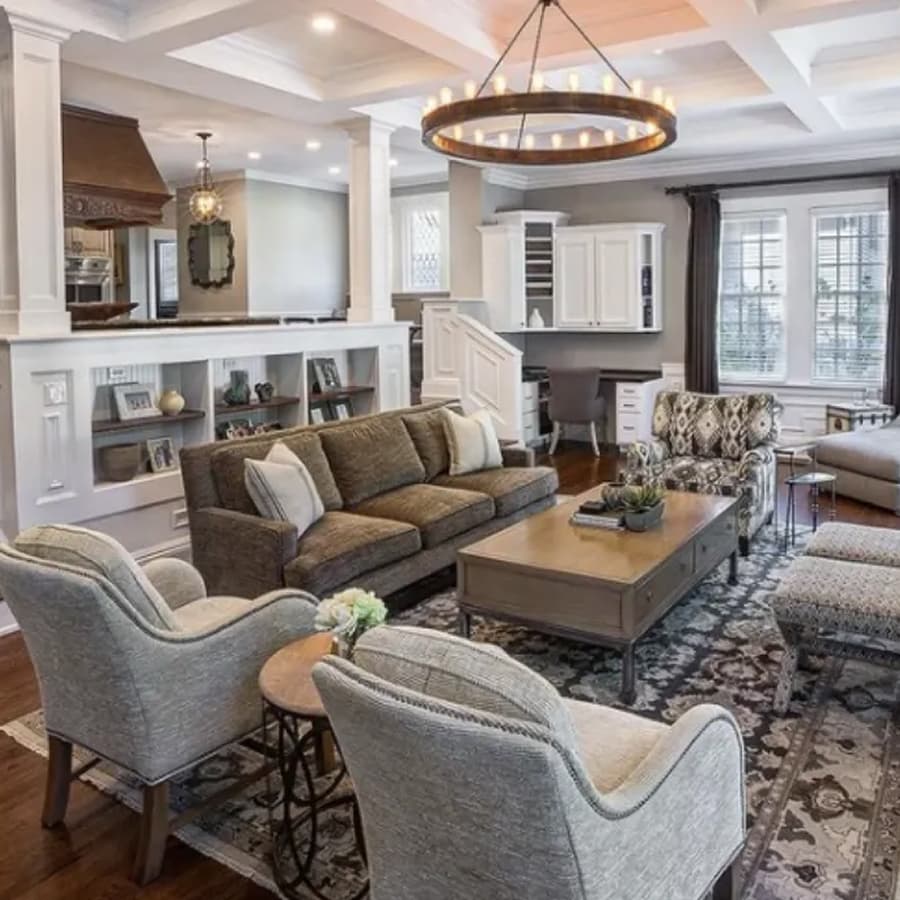
Two project delivery models dominate residential and commercial construction in NE Florida: design-build (one contractor handles everything from design through construction) and traditional contracting (the homeowner hires an architect, then bids the construction separately).
The right choice depends on the scope, the homeowner's risk tolerance, and how much project management the homeowner wants to take on.
What design-build actually means
Design-build means one contract covers the entire project — architectural design, structural engineering, mechanical (HVAC) design, all permits, all trade work, all warranty. The homeowner has one contract and one phone number to call.
Tivey's process is design-build. The first walkthrough produces both a scope and a price; the contract covers everything from design through Certificate of Occupancy.
What traditional contracting actually means
Traditional means the homeowner hires an architect first ($5,000 to $50,000 depending on scope), then takes the architect's drawings to bid out construction with multiple builders. The selected builder coordinates sub-trades; the architect remains involved as the homeowner's representative.
Three contracts (architect, structural engineer, builder) become the homeowner's responsibility to integrate.
The integration risk
The biggest difference between the two models isn't cost or timeline — it's who owns the gaps.
In a design-build project, the contractor owns the gaps. If the structural engineer's drawings don't match the architect's vision, the contractor fixes it on their side. If the HVAC contractor's rough-in conflicts with the plumbing rough-in, the contractor sequences both.
In a traditional project, the homeowner owns the gaps. If the architect didn't anticipate a structural condition, the builder issues a change order. If the engineer's specs cost more than the architect quoted, the homeowner pays the difference. Each handoff creates risk.
For most homeowners on residential projects of any meaningful complexity, the integration risk is the dominant cost. Design-build typically costs 5 to 10% more in headline price and saves 15 to 25% in actual delivered cost because the integration risk is eliminated.
When design-build is the right call
Five scenarios where design-build wins:
1. The project is complex. Whole-home remodels, additions with structural work, commercial build-outs. The integration burden is high; design-build absorbs it.
2. The homeowner doesn't want to manage trades. Most homeowners' day jobs aren't construction project management. Design-build outsources that role.
3. The schedule matters. Design-build runs design and pre-construction in parallel with permitting; traditional usually runs them sequentially. For time-sensitive projects, design-build saves 4 to 12 weeks.
4. The budget needs to be predictable. Design-build contracts typically include the design and engineering cost in the headline price. Traditional contracts add design fees, engineering fees, and construction fees separately, with each subject to scope creep.
5. Single-source warranty matters. When something is wrong 5 years later, you call one number. With separate contracts, you call the architect (who blames the builder), the builder (who blames the engineer), and the engineer (who blames the architect). Design-build has clear accountability.
When traditional is the right call
Three scenarios where traditional makes more sense:
1. The architectural design is exceptional and central to the project. A landmark architect's specific design vision sometimes requires a separate architect contract. Most NE Florida residential projects don't fall into this category, but some do.
2. The scope is small and well-defined. A simple 200 sqft sunroom addition with no design ambiguity may not need design-build's full process. The cost difference can favor traditional.
3. The homeowner specifically wants the architect as their advocate. Some homeowners prefer the architect's role as their representative monitoring the builder. This adds cost but provides oversight that design-build's single accountability doesn't.
The cost reality
For a $300,000 NE Florida residential addition:
Design-build: $300,000 headline price covers everything — design, engineering, permits, construction, warranty. May be 5-10% higher than the construction-only number a traditional contractor would quote.
Traditional: Construction $270,000 + architect $15,000 + structural engineer $5,000 + mechanical engineer $3,000 = $293,000 base. Plus typical change orders for integration issues add 10-20% = $40,000-$60,000. Realistic total: $333,000-$353,000.
The math typically favors design-build at residential addition scope.
The accountability difference
When something goes wrong post-construction, the difference is sharp:
Design-build with Tivey: Call the contractor. The contractor owns the diagnosis, the fix, and any sub-trade coordination required. One conversation.
Traditional: Call the contractor. The contractor reviews the architect's drawings (their responsibility ended at substantial completion). The architect reviews the contractor's execution. Each blames the other if it's a coordination failure. The homeowner becomes the arbiter. Multiple conversations, often without resolution.
This pattern is consistent across NE Florida residential and commercial projects. Design-build's single accountability is the most underrated benefit of the model.
What to ask a design-build contractor
If considering design-build, three questions worth asking:
1. "Show me the design phase deliverable." The design phase should produce architectural drawings, structural engineering, mechanical design, and a clear scope document. If the design phase deliverable is just a sketch and a price, the design-build label isn't being used in its real sense.
2. "Who does your structural engineering?" A real design-build contractor has a relationship with a Florida-licensed structural engineer who works on their projects regularly. The engineer should be named.
3. "What's your change-order rate?" A well-run design-build project sees fewer than 5 change orders on a residential addition. If the contractor's typical change-order rate is 15-20+, the integration is being deferred to construction stage instead of solved at design stage.
What to ask a traditional contractor
If considering traditional, two questions worth asking:
1. "Who coordinates between the architect and the engineer?" If the answer is "the homeowner," the integration burden is yours. Some traditional contractors offer construction management services that absorb this; understand who's doing it.
2. "What's the change-order process?" Traditional contracting almost always sees more change orders than design-build. Understand the markup (typically 15-25%) and the approval process before signing.
Related reading
- Whole-Home Remodel Cost & Permits in Clay County, FL — full guide
- Mark Tivey Process Walkthrough: Design to Handoff — what design-build looks like in practice
- Whole Home / General Remodeling — Tivey Construction — service overview
Ready when you are.
Tell me about your project — you'll see your real budget range mid-flow, and I'll call within 24 hours. No spam, no call center, just me.